

2026 Novartis Symposium
Daniel Weix and Kian Tan
Taylor Auditorium, Frick Chemistry Lab B02
Host: Jose Roque
Speaker Details:
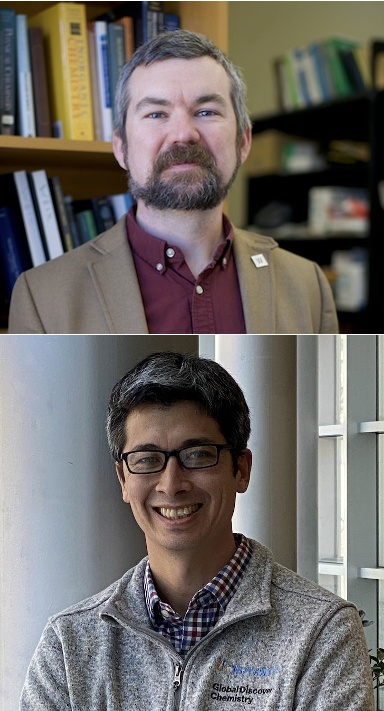
Daniel Weix
Wayland E. Noland Distinguished Professor of Chemistry
Department of Chemistry
University of Wisconsin-Madison
Kian Tan
Director, Novartis Institutes for BioMedical Research
Professor Daniel Weix: New Electrophiles, Strategies, and Catalysis for Cross- Electrophile Coupling
The primary challenge for synthetic chemists is supporting the efficient exploration of chemical space to find the best molecules for understanding or solving problems. In the past decade, cross-electrophile coupling, the union of two different electrophiles driven by reductive transition-metal catalysis, has become an increasingly used tool in these efforts. By focusing method development on the largest pools of pre-functionalized molecules, the millions of available formal carbon electrophiles, chemical space can be more efficiently accessed than through reactions limited to the thousands of carbon nucleophiles. Realizing the potential of these reactions requires the development of strategies to utilize the most abundant electrophile pools and to ensure the reactions favor the cross-coupled product over potential homodimeric products. Guided by mechanistic understanding, we have developed general strategies tailored to C(sp)-C(sp3), C(sp2)-C(sp2), C(sp2)-C(sp3), and C(sp3)-C(sp3) bond formation based upon differential modes of activation (two-electron vs single-electron), multimetallic catalysis, and utilizing the general idea of persistent vs transient intermediates. This talk will briefly introduce the mechanistic underpinnings of selectivity in cross-electrophile coupling reactions for C(sp2)-C(sp3) bond formation and then discuss recent developments in the design of better catalysts, new electrophiles, and new reactions. In particular, this talk will explore new uses of electrophiles derived from carboxylic acids and less reactive electrophiles, such as organic chlorides and 5-membered heteroaryl halides. Another focus will be the reductant approach (chemical, electrochemical, photochemical) and its implications for reactivity. Finally, utilizing these concepts, a new approach to C(sp3)-C(sp3) bond formation will be discussed.
Dr. Kian Tan: Living In Uncertainty: Application Of Active Learning In Drug Discovery And Synthesis
The SynTech group at Novartis focuses on how synthesis and technology can be leveraged to impact drug discovery. This seminar will illustrate our application of synthesis, automation, and machine learning to accelerate the design make test analyze cycle. A particular focus will be given to how we use models and active learning techniques in molecular design. As well as our efforts to democratize these tools within the medicinal chemistry community.