

BMS Symposium: Emily Cherney and Thomas Maimone
BMS Symposium
Taylor Auditorium, Frick Chemistry Lab B02
Host: Jose Roque
Speaker Details:
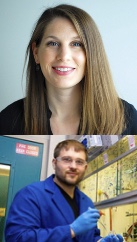
Emily Cherney
Scientific Associate Director
Bristol Myers Squibb
Thomas Maimone
Professor of Chemistry
University of California, Berkeley
Dr. Emily Cherney: Exploring Pathways in Immuno-oncology With Small Molecules: IDO Inhibitors, STING Agonists, and Helios Degraders
Over the past decade, the field of immuno-oncology has looked to diversify beyond antibody-derived checkpoint inhibitors and exploit mechanistic pathways capable of being perturbed by small molecules Targetinclude indoleamine 2,3-dioxygenase 1 (IDO1), stimulator of interferon genes (STING), and Helios (IKZF2). IDO1, which catalyzes tryptophan metabolism, leads to suppressed proliferation, anergy, and apoptosis of T-effector cells and supports the formation of T-regulatory (Treg) cells. STING, which is indirectly activated by cytosolic DNA via cyclic dinucleotides (CDNs), is a key component of the innate DNA-sensing immune pathway. STING activation has been implicated in priming CD8+ T cells to recognize and attack tumors. Helios is a zinc finger transcription factor attributed to the immunosuppressive effects of Treg cells. Helios degradation modulates Treg cells by transcriptionally reprogramming function towards a more destabilized, inflammatory state. This presentation will focus on medicinal chemistry efforts to optimize a heme-displacing class of IDO1 inhibitors, identify a non-CDN derived STING agonist with cross-species activity, and discover a highly selective CELMoDTM degrader of Helios. Through the lens of these discovery stories, strategies to navigate real-world challenges in medicinal chemistry will be explored. Topics will include bioisosteres, prodrugs, conformational analysis, chemotype hybridization, pan-assay interference compounds (PAINS), neosubstrate selectivity, and mechanistic characterization.
Professor Thomas Maimone: Synthetic Studies of Complex Natural Products
Natural products continue to provide inspiration for improved synthetic design processes and serve as potential leads for drug discovery and chemical biology applications. This talk will highlight the development of efficient synthetic pathways toward biologically active polycyclic natural products with a focus on the enabling synthetic strategies used as well as unexpected chemical findings along the way.