

Guy Bertrand
Carbenes and Even More Electron-Deficient Carbon Species
Taylor Auditorium, Frick Chemistry Lab B02
Host: Jose Roque
Speaker Details:
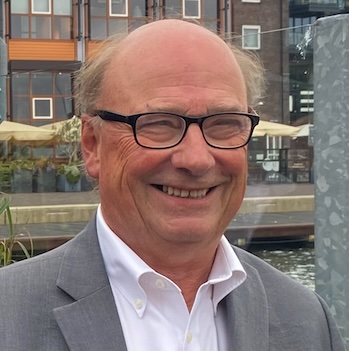
Distinguished Professor
Director of the UCSD/CNRS Joint Research Chemistry Laboratory
Department of Chemistry
University of California San Diego
Our group likes challenging the rules of chemistry and thinking about and beyond the concepts found in the chemistry textbooks, as exemplified by our search of low-coordinate carbon species which defy the octet rule. The search for electron-deficient species is certainly not new, but history proved that their discovery could lead to important applications. In 1900, Gomberg discovered the first stable tertiary radical Ph3C●, which features a carbon atom with only seven valence-electrons. Soon after, von Baeyer and Villiger identified Ph3C+ with only six valence-electrons. These species had long been considered laboratory curiosities but later found many applications allowing Herzberg and Olah to receive the Nobel Prize in 1971 and 1994, respectively. Similarly, the generation of transient carbenes were first reported by Staudinger at the beginning of the XXth century and have much more recently found numerous applications which spans organic, organometallic, medicinal chemistry, and materials science. This is due to the development of numerous scaffolds to sustain these species. We will discuss new families of stable carbenes and show their possible applications. We want to push the boundaries further, undressing carbon, down to just five- and even four-valence electrons, and our recent results will be presented. Lastly, a part of the lecture will be devoted to the use of masked carbon-centered radicals for preparing recyclable polymers.