

Hung-Wen Liu
Mechanistic Studies of Unusual Biosynthetic Enzymes
Taylor Auditorium, Frick Chemistry Lab B02
Host: Michelle Chang
Speaker Details:
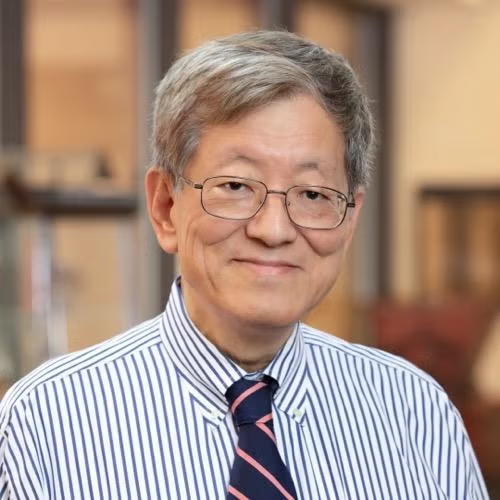
Professor of Chemical Biology & Medicinal Chemistry
George H. Hitchings Regents Chair in Drug Design
Texas Pharmacy
The University of Texas at Austin
Radical S-adenosyl-l-methionine (SAM) enzymes are currently the largest known group of metalloenzymes and catalyze an extraordinarily broad range of radical-mediated chemical reactions. All radical SAM enzymes are unified by the presence of an active site [Fe4S4] cluster that can reductively cleave SAM and thus initiate the catalytic cycle. Radical SAM enzymes are also found in the biosynthesis of nucleoside natural products with oxetanocin A and albomycin δ2 being two notable examples. OxsB is a cobalamin-dependent radical SAM enzyme that participates in the biosynthetic conversion of 2′-deoxyadenosine 5′-monophosphate (2′-dAMP) to the antiviral and antibiotic agent oxetanocin A, which contains a four-membered oxetane ring. Recent findings indicate that OxsB catalyzes an oxidative, intramolecular C‒C bond formation in 2′-dAMP to yield a highly unstable bicyclic intermediate. This intermediate undergoes regioselective bond cleavage catalyzed by OxsA to afford oxetanocin A aldehyde phosphate. Albomycin δ2 is a nucleoside antibiotic possessing a unique thiofuranose moiety. Biosynthesis of the thiofuranose ring requires an unprecedented, radical-mediated, sulfur-for-oxygen swapping reaction catalyzed by the twitch radical SAM enzyme AbmM. Recent studies have provided evidence that the sulfur is donated by the radical SAM [Fe4S4] cluster in this reaction. Furthermore, the immediate product of the AbmM catalyzed reaction undergoes a dehydration reaction involving a phosphorylated intermediate generated by the multifunctional kinase AbmG. The biosynthetic roles of these enzymes, their mechanisms of catalysis, and the insights they can offer for furthering our understanding of radical SAM enzymology will be discussed in this presentation.