

Neel Shah – Time & Location Change
Probing Protein Structure, Dynamics, and Molecular Recognition Using DNA Deep Sequencing
Princeton Neuroscience Institute, Room A32
Host: Ralph Kleiner
Speaker Details:
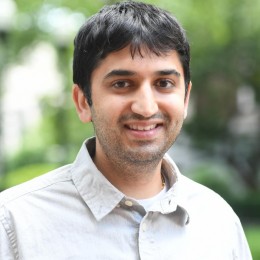
Assistant Professor of Chemistry
Columbia University
Department of Chemistry
Signaling proteins have evolved fine-tuned properties to ensure that cells can respond effectively to their environments. These proteins can typically access multiple conformations, each with different biochemical activities, and the distribution of these conformations is tightly regulated by intermolecular interactions and post-translational modifications. Signaling proteins also often engage in multiple, reversible protein-protein interactions, but they do so with selectivity that is critical for accurate signal transduction. While these features make signaling proteins versatile and responsive, they also make these proteins highly susceptible to dysregulation by mutations. Indeed, many disease-associated mutations drive pathological cell signaling by altering protein conformational ensembles and protein interaction specificities.
In order to explore mutational effects and structure-function relationships in signaling proteins, our group has developed a suite of methods that leverage the power of DNA deep sequencing, coupled with selection assays on peptide and protein libraries, to make tens of thousands of biochemical measurements at once. We are applying these approaches to two disease-relevant classes of signaling enzymes, tyrosine kinase and tyrosine phosphatases, which regulate a range of cellular processes including proliferation, survival, differentiation, and programmed death. In this presentation, I will describe how our methods have led to the discovery of new mechanisms of enzyme dysregulation, revealed hidden protein conformational states, and enabled strategies for the development of selective chemical probes to perturb and understand cell signaling pathways.