

SILS: Jin-Quan Yu
Enantioselective C-H Activation with Bifunctional Ligands: From Curiosity to Industrialization
Taylor Auditorium, Frick Chemistry Lab B02
Host: The Hyster Lab
Speaker Details:
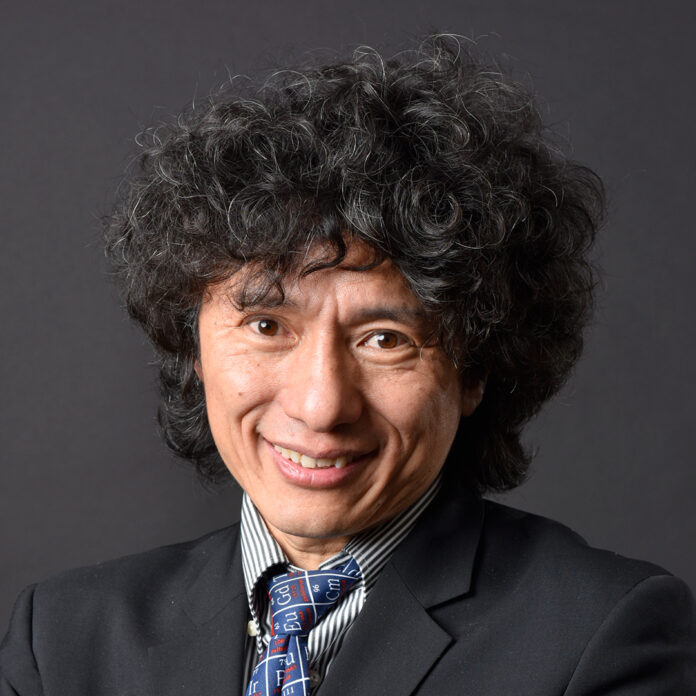
Bristol Myers Squibb Endowed Chair in Chemistry
Frank and Bertha Hupp Professor of Chemistry
Department of Chemistry
Scripps Research
The widespread presence of C–H bonds at various sites of synthetic substrates renders C–H activation the most powerful platform for developing catalytic reactions for synthesis. To realize the full potential of C–H activation for synthesis, four fundamental challenges must be addressed: developing diverse carbon-carbon and carbon-heteroatom bond forming reactions of diverse poorly reactive native substrates (ReactivitY); enantioselective C–H activation reactions via asymmetric metalation of C–H bonds (EnantioselectivitY); site selective metalation and functionalization of remote C–H bonds (Site-selectivitY); achieving catalytic cycles using sustainable oxidants such as molecular oxygen, aqueous hydrogen peroxides as the terminal oxidants (SustainabilitY). Despite century-long efforts, seeking solutions to these problems has met with limited success due to a fundamental challenge: lack of ligands that can accelerate C–H activation reactions.
By combining the weak coordination (entropy) from substrates and ligand acceleration (enthalpy), we have made substantial progress towards addressing these four challenges. Most notably, ten generations of bi-functional ligands (MPAA, APAQ, APAO, MPAAm, MPAThio, Pyridine-Pyridone, Amine-Pyridone, Amide-Pyridone, Thio-Pyridone, Triazole-Pyridone) have been developed to enable a wide range of enantioselective1-6 and site-selective7-15 C–H activation reactions of diverse classes of native substrates. In parallel, we have realized C–H hydroxylation using molecular oxygen or aqueous hydrogen peroxide as the terminal oxidants, paving the way for large-scale industrialization.11,12 Applications of our new catalysts and reactions at BMS, Vertex, Lilly, Merck, Pfizer, Vividion, ArCHitect will be discussed.