

Lilia Xie receives major early-career grant from ACS Petroleum Fund
Lilia Xie, assistant professor in the Department of Chemistry and in the Princeton Materials Institute, has been awarded an American Chemical Society (ACS) Petroleum Research Fund grant, the first major, external award for the Xie Lab.
The two-year Doctoral New Investigator grant supports fundamental, early-career research directly related to petroleum or fossil fuels. It is intended as seed money to help P.I.s initiate new research directions. The grant is one of 113 new projects nationwide announced by the ACS, representing a total $12M research investment by the Society.
Xie won the grant for her proposal, “Quantum-Confined Magnetic Semiconductors Derived from Petroleum,” which seeks ways to turn sulfur compounds derived from crude oil into building blocks for new families of magnetic semiconductors.
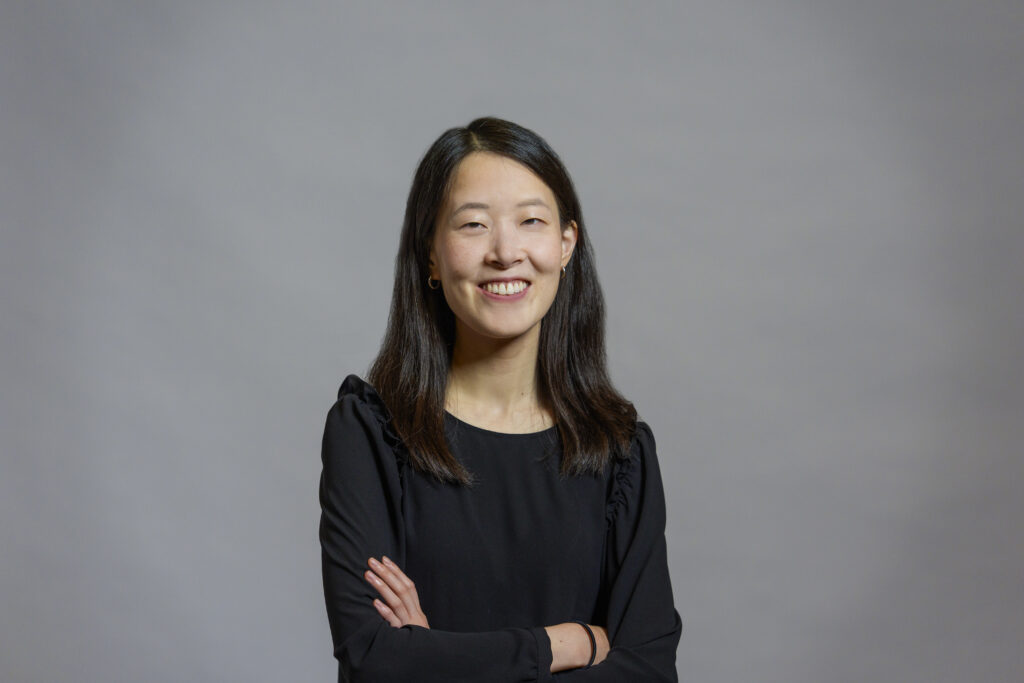
Assistant Professor of Chemistry Lilia Xie.
“Broadly speaking, my lab is interested in incorporating molecules into low-dimensional inorganic materials as a means to control the resulting electronic and magnetic properties,” said Xie, who added that she was thrilled to receive the grant. “With this ACS PRF grant, we will specifically target sulfur-containing molecules and long-range magnetic order.
“I’m looking forward to developing synthetic routes and structure–property relationships for these materials that will hopefully be relevant to many projects in the group, especially those concerning other materials grown via solution-phase self-assembly.”
Sulfur, an integral product of petroleum, accounts for up to 14% by weight in some crude oils. Molecules containing sulfur are typically removed during the refining process because they are corrosive and they can deactivate the catalytic process during refining. But with a focused investigation, Xie sees untapped potential in their under-utilization for next-generation technologies.
According to her proposal, thiols in particular have been demonstrated to be versatile components of low-dimensional, solution-processable semiconductors with tunable optoelectronic properties. Xie proposes two routes to obtain new magnetic thiolates, expanding the compositional scope of thiolate materials to include magnetic semiconductors.
Xie hypothesizes that the targeted compounds will exhibit high carrier mobilities due to strong covalent bonding, with quantum confinement enforced by the organic groups on the thiolate ligands and long-range magnetic order arising from strong coupling between open-shell transition metals.
“Most known thiolate-based semiconductors are based on non-magnetic metals. We will incorporate transition metals with unpaired spins into these materials to introduce magnetic functionalities,” said Xie. “The idea is to use sulfur-containing molecules present in petroleum, which are usually considered undesirable side products, as components of new advanced materials.”
The research also offers broad training in inorganic synthesis and materials characterization to her lab members, now 10-members strong. For example, they will receive training in solvothermal synthesis techniques for the growth of coordination polymers and develop intuition and experience in troubleshooting and optimizing conditions.
Xie, a 2014 Princeton alumna, joined the faculty at Princeton in January 2025.
She completed her undergraduate thesis under the mentorship of Robert Cava, the Russell Wellman Moore Professor of Chemistry. She completed her doctorate in chemistry at the Massachusetts Institute of Technology, and her postdoctoral work at the University of California, Berkeley, as an Arnold O. Beckman Postdoctoral Fellow.